Nutritious Life: Healthy Tips, Healthy Recipes, Exercise

Become a Nutrition Coach! Get certified. Grow your business. Join our thriving community. Call 888-488-4077 or Schedule an Appointment!

|

FEATURED VIDEOS

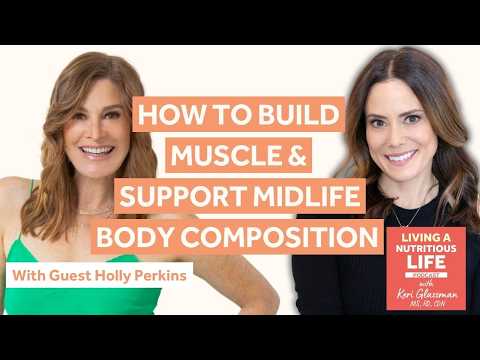
Episode 81: Midlife Body Composition: Why Muscle Gain Matters More Than Ever After 35

Episode 81: Midlife Body Composition: Why Muscle Gain Matters More Than Ever After 35

Living a Nutritious Life Podcast In this exciting episode of Living a Nutritious Life Podcast, we are thrilled to welcome Holly Perkins ...

WATCH NOW
How Your Brain 'Washes' Itself While You Sleep

How Your Brain 'Washes' Itself While You Sleep

Your brain has a nightly cleaning crew And it only clocks in when you actually get deep sleep. In this episode of Living a ...

WATCH NOW
If my heart could order dinner, I'd pick this!

If my heart could order dinner, I'd pick this!

Made a super easy healthy dinner tonight and realized it's for Heart Month ❤️ Salmon: rich in omega 3s may help reduce ...

WATCH NOW
Why Meditation is Like Brushing Your Teeth

Why Meditation is Like Brushing Your Teeth

You know a habit is working when skipping it feels… weird With years of experience in yoga, Pilates, and mindfulness, Kristin ...

WATCH NOW

VIDEO ARTICLES

How to Do a Deadlift in 8 Simple Steps

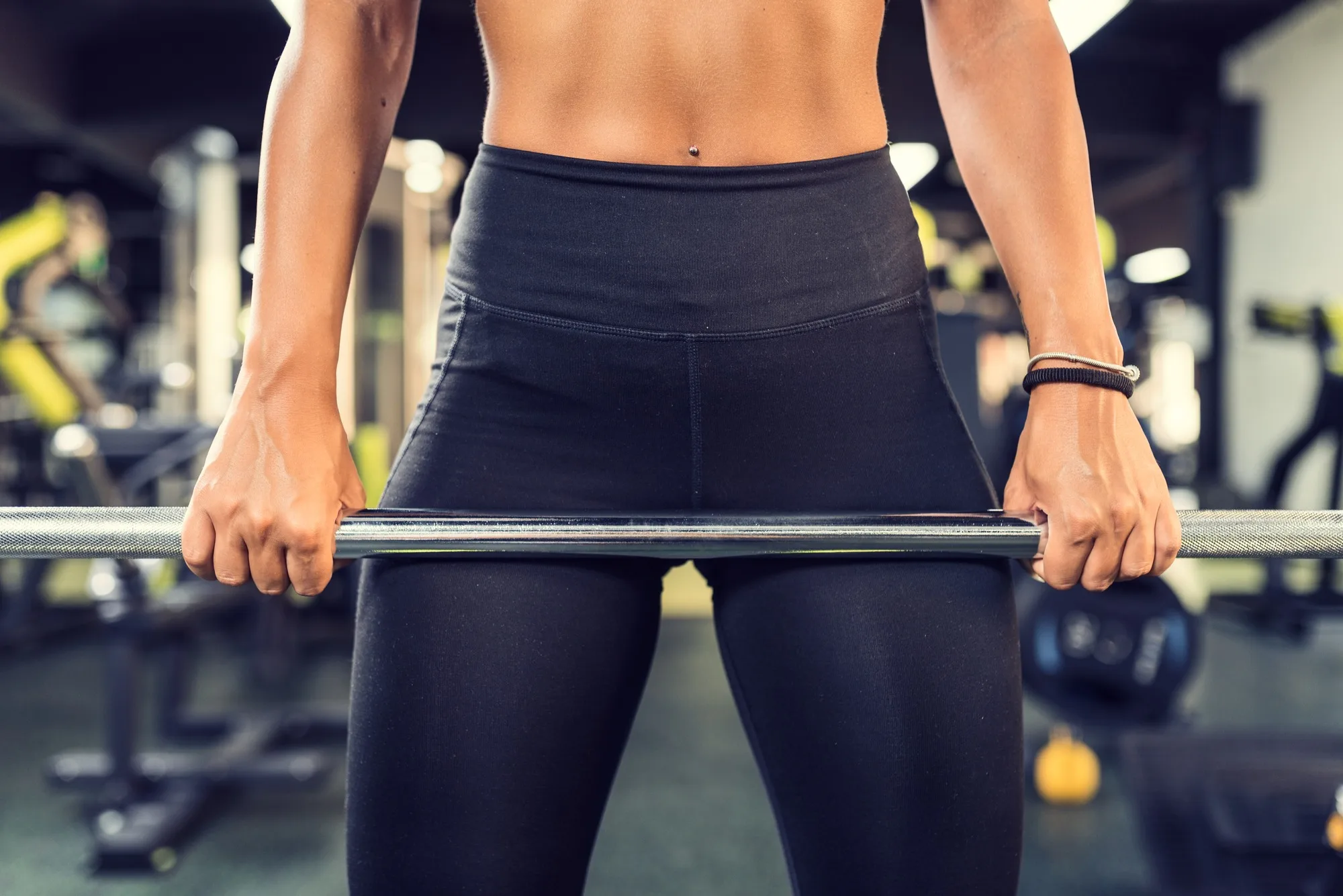
By Robin Barrie Kaiden, MS, RD, CDN, NLC The deadlift is an effective full-body exercise. Not only will it help improve your athletic performance in any sport you play, it will also help you lift things in daily life, whether it’s groceries, kids, or luggage.  And from a full-body fitness perspective, the deadlift recruits many muscle groups. It works your hamstrings, glutes, adductor muscles (inner thighs), calves, and even your quads as you extend back to a standing position. You need to engage the muscles of your upper, mid, and lower back, too, along with your core, which keeps you stable throughout the movement. You also recruit your shoulders and forearms to support the weight. RELATED: 3 Insanely Effective Pilates Moves for Core Strength But it’s important to make sure you know how to do a deadlift properly (shown here). Otherwise, you risk hurting your back. How to Do a Deadlift the Right Way Line the weight up between your heels. Stand up tall. Keep your feet flat and straight. Hinge forward with a straight (not rounded) back to grab the weight. Maintaining a straight line from your head to your hips, create tension in the shoulders by pretending to break the weight. Stand up tall, squeezing glutes, driving heels into the ground, keeping the weight close to your body, and engaging your core. Lower down to tap the floor with weight.  Come right back up. Again, it’s crucial to keep proper form during this exercise to prevent injury, especially to your lower back. And don’t stress: This is a hard exercise to master, so it’s okay to start with a low weight, a medicine ball, or even no weight at all to practice the hinge forward motion (which is very different from a squat!).  As you advance, you can increase your weight and/or reps. You can also try different variations by using a kettlebell, barbell, or hexagonal trap bar. Once you learn how to do a deadlift properly, don’t be surprised how much a couple of sets can make you sweat. More Perfect Form with Robin Barrie Kaiden: How to Do a Push-Up How to Do a Plank How to Do a Squat (Video: Robin Kaiden) (Photo: Shutterstock)

READ ARTICLE

The Amazing Artichoke: How to Steam Them, Cook With Them and Much More

Spring is just around the corner, and that means one thing: Delicious spring veggies are going to be showing up in produce aisles very soon. One of my all-time favorite spring veggies is the artichoke. Why do I love artichokes so much? Read on to find out. Health Benefits of Artichokes Artichokes have a unique flavor that works well in many recipes (and you know you love them in dips!) But there are numerous health benefits to artichokes as well. They are low in fat and calories but rich in vitamins, minerals, antioxidants and fiber. They have been popular for their ability to lower cholesterol, improve digestion and boost heart, brain and liver health. Artichokes also contain a powerhouse flavonoid called luteolin, which protects the brain—particularly from brain fog—while increasing memory, fighting inflammation and free radicals, and preventing cholesterol formation. Artichoke leaf extract encourages your body to process cholesterol more efficiently, leading to lower overall levels. It also helps prevent plaque deposits in your arteries, thus helping in the fight against heart disease. (The battle is real!) It’s no wonder that artichokes are native to the Mediterranean region and a staple of the uber-healthy Mediterranean diet. I’ve even highlighted them in my book, “The O2 Diet”, because artichokes are not only healthy but they’re delicious and fun to eat. Yes, artichokes can be intimidating with their prickly thorns, spiky leaves and fibrous, hairy choke. But once you learn how to work with them, you’ll be hooked. I promise. Below, watch my quick tutorial on how to steam them if you want to eat them in their most wholesome state. 10 Simple Steps to Steaming an Artichoke View this post on Instagram A post shared by NUTRITIOUS LIFE (@nutritiouslifeofficial) Step-by-Step Guide to Steaming an Artichoke 1. Pick an artichoke with tight leaves that feels dense. 2. Rinse it thoroughly in cold water. 3. Cut the tips of its leaves (or bracts) off and trim the remaining leaves. 4. Rub lemon across the trimmed top to reduce oxidation. 5. Cut the artichoke stem so 1 inch remains. 6. Place it in a steamer and bring the water to a boil. Steam for approximately 30 minutes. 7. Remove artichoke from steam and appreciate its amazingness! 8. Peel off the outer leaves. 9. Eat the artichoke by scraping the leaves between your teeth. 10. Peel off the soft baby leaves and cut off the fuzzy part (choke). Enjoy! Fun Facts About Artichokes They’re a thistle: Artichokes aren’t technically vegetables, but rather the edible flower buds of a plant in the thistle family. They’re harvested before the plant’s flowers come into bloom. It’s called a choke for a reason: To get to the edible parts of an artichoke, which are the heart and inner leaves (technically called bracts), you first have to strip away the intimidating, inedible parts. This includes the outer leaves (or bract) and the choke, which is the hairy, throat-clogging portion of the plant that buds into a flower if left to mature. A small town in California is the artichoke capital of the world: Castroville in California’s Monterey County not only grows most of the state’s artichokes, but it’s also home to the annual Castroville Artichoke Festival. The fest has been going on since 1960, but has gotten so big in recent years that it had to be moved out of the town to a nearby convention center. Now that I’ve given you a lot of reasons to love artichokes, read on for some artichoke recipes I love. Eat More Artichokes Artichokes can be eaten raw, steamed, baked, roasted, grilled or fried, and their flavor evolves with each iteration. Here are a few delicious recipes featuring the delicious, nutrient-dense and underrated … artichoke! Roasted Artichoke Hearts You can roast them with just a little extra-virgin olive oil, salt, and pepper for a crispy touch. They work as a side dish on their own or as a topper on salads, a flavor enhancer in a spinach artichoke pasta or even in an artichoke soup. Hearts of Palm and Artichoke Salad Hearts of palm and artichokes are the perfect burst of spring flavors in a salad and the antidote for when you’re just tired of the same old kale and spinach salads. Veggie variety not only prevents you from getting bored of your healthy diet, it’s also important to ensure you’re getting in a wide range of nutrients. Stuffed Chicken Breast With Lemon-Artichoke Pesto Artichoke pairs really well with chicken and it plays a starring role in this recipe. Followed by walnuts, fresh basil and antioxidant-rich garlic. It’s a far cry from the standard stuffed chicken of cordon bleu fame, which is typically stuffed with ham and cheese, then breaded and covered with a thick, creamy sauce. The only similarity between that and our recipe is the stuffed chicken. Chicken with artichoke might not be traditional like cordon bleu, but something tells us the French would still approve. (Images: Shutterstock)

READ ARTICLE

5 Guided Meditations to Fall Asleep Faster

Maybe all you need is a super soothing voice easing you into slumber.

READ ARTICLE

Sugar Cravings: 5 Reasons They Happen and How to Stop Them

Sugar Cravings: 5 Reasons They Happen and How to Stop Them

It’s like a little army of meanies grab hold of you and torture you until you feed them jellybeans, right?

READ ARTICLE

De-Fluff Your Puff: 5 Exercises to Reduce Bloating

We all overindulge on food from time to time, and this can leave us feeling sluggish and bloated. Can you relate? Bloating is usually caused by an increased production of gas in the colon, which can happen for a number of reasons, such as: from the food you have eaten, consuming food too fast, inadequate amounts of fiber, or even stress.   Certain foods or drinks may help relieve bloating, but a more surefire way to soothe your distended belly is to do some simple stretching. Below I have created a stretching sequence that will help reduce any discomfort you may be feeling while also helping to beat the bloat.    This sequence involves rotational poses to massage and tone your abdomen, as well as restorative poses to help calm your nervous system and support full-body relaxation.  TOP TIP: Remember to inhale and exhale in each position and at the end of the sequence, sit upright and take 5-6 deep breathes to calm and center yourself.  The Sequence   Cat to Cow   How To  Start on your hands and knees, with your wrists directly underneath your shoulders and your knees directly below your hips.   Keep your fingers pointing forward with your hands shoulder-width apart. Keep your head and neck in a neutral position and gaze down at the floor. Exhale, and round your spine up toward the ceiling, drop your head down, draw your abdominals in towards your spine, tuck the pelvis, and keep your shoulders in the same position.   Make sure to draw your shoulders away from your neck in this position. Inhale, uncurl, and start to arch your spine by lifting your chest forward and allowing your sit bones to tilt up towards the ceiling.   Keep gazing forward, exhale, and repeat 8-10 times. Once completed, return to a neutral position on your hands and knees. Technique Tips   Try to avoid arching primarily in your lower back and pushing out your ribs when in Cow pose. Try to avoid tucking your chin into your chest when in Cat pose.   Perform 8-10 repetitions.  Seated Forward Fold   How To  Start by sitting upright on your mat, with your legs extended out in front of you, feet flexed and pointing up towards the ceiling.  Place your hands down by your sides with your fingers facing forward, palms facing down on the mat, with a soft bend in your elbows. Rock slightly from side to side to make sure your sit bones are as far away from your heels as possible.   Contract your thighs so you are pressing the back of your legs into the mat. Keep flexing your feet. Inhale, and lift your arms straight up toward the ceiling, feeling your spine lengthen. Exhale, and stretch your sternum forward, bending from your hips and bringing your arms with you. Keep moving forward slowly, lowering your abdominals to your thighs. Grasp the soles of your feet or ankles and keep a soft bend in your elbows. With each inhalation, lengthen your spine. With each exhalation, move deeper into the stretch.   Technique Tips   Make sure to avoid rounding your spine when lowering your sternum forward. If needed, you can place a folded blanket underneath your buttocks to help guide the forward bend from your hips.   If your flexibility is limited, please use a yoga strap to help support you in this pose. Place the ends of the yoga strap in each hand and place the middle of the strap against the soles of your feet. Remember to keep tension in the strap and avoid letting it sag. Alternatively, you can modify this pose by keeping the right leg straight out in front of you, bending the left knee and drawing the heel towards your groin, with the sole of your foot placed on your right inner thigh. Complete the rest of the movement as is and repeat on the other side.   Hold for 30-45 seconds.  Seated Twist   How To  Start by sitting upright on your mat, with your legs extended out in front of you, feet flexed and pointing up towards the ceiling.  Place your hands down by your sides with your fingers facing forward, palms facing down on the mat, with a soft bend in your elbows. Bend your right knee and place your right foot over your left leg. Your right foot should be flat on the floor outside of your left thigh. At the same time, bend your left knee, resting the outside of your left thigh on the floor. Your left heel should be next to your right sit bone. Inhale, and lift up through your spine and chest while keeping your shoulders relaxed. Exhale and begin twisting to the right. Place your left elbow on the outside of your right knee and bring your right hand on the floor behind your hips. Turn your head to the right. Twist deeper with each exhalation and keep length in your spine from the bottom up. Think of your head and neck reaching up to the ceiling and your tailbone rooting down toward the floor. Repeat on the other side.   Technique Tips   Try to keep rooting the foot of the raised leg down into the floor and avoid lifting it off.   Keep space between your shoulders and ears and avoid tensing and elevating the shoulders up.  Try to avoid rounding your spine when moving deeper into the twist.   Hold for 30-45 seconds.    Bow Pose   How To  Start by lying prone (face down) on your mat. Place your arms by your sides with your palms facing up. Place your chin on the floor and exhale as you bend your knees back towards your bottom. Reach your arms behind you, grasping the outside of your ankles with your hands. Inhale and lift your chest off the floor while simultaneously lifting your thighs, by pulling your ankles up with your hands. Make sure to shift your weight onto your abdominals and tuck your tailbone into your pubis. Keep your head in a neutral position and make

READ ARTICLE
How to Calculate Your Bedtime

Targeting Your Ideal Bedtime Creating your ideal bedtime significantly increases the chances you’ll get both the quantity and the quality of sleep you need. You may be unsure about the right bedtime, but you’re likely to know exactly what your wake time needs to be. That’s because most people have what I call a socially determined wake up time. There is some external commitment—caring for a child, getting ready for work or school, getting the dog outside—that dictates when we must wake and begin our day. Most of us do not have a wake time that is wholly within our control. Bedtime, on the other hand, offers us much more discretion and freedom. In order to set your ideal bedtime, you’ll start by using your wake time. Sleep Goals In creating a nightly sleep routine and an ideal bedtime, you’re working to meet a couple fundamental sleep goals: getting enough sleep, and making sure it is high-quality rest. My two-part sleep calculator will help you do both. This simple sleep calculator uses information about your sleep cycle to get sufficient rest, maintain healthy circadian and sleep-wake rhythms, and wake naturally feeling refreshed and ready to begin your day. Ideal Bedtime Sleep Calculator This formula tackles sleep quantity. The only information you need is your wake-up time. Here’s how it works: The average sleep cycle is 90 minutes long A typical night of sleep includes 5 full sleep cycles 90 x 5 = 450 minutes, or 7.5 hours Starting at your wake time, work back 7.5 hours to find your bedtime For example: You need to wake at 6 a.m. to get ready for work. Counting back 7.5 hours, your ideal bedtime is 10:30 p.m. That means lights out, in bed, ready for sleep at that time. This bedtime is a starting point, and may need some adjustment, as individual sleep cycles vary in their duration. Try your new bedtime for a week. The goal is to wake naturally about 5-10 minutes ahead of your alarm. If you find yourself waking significantly ahead of your alarm, move your bedtime slightly later. If after a week, you’re still sleeping right through to your alarm, you need to shift your bedtime earlier. Do so in 15-minute increments until you’re waking naturally just before your alarm. Not Just More Sleep, But Better The Ideal Bedtime sleep calculator takes care of sleep quantity. But what about sleep quality? Sleep quality is achieved by sustained rest, with sufficient time spent in each of the four sleep stages—Stages 1-3 and REM sleep—to maintain physical and mental health and function. Sleep efficiency is one important measure of sleep quality used by sleep scientists and physicians. There’s an easy, low-tech way to measure sleep efficiency that requires no sleep tracking devices or equipment. You need only a few basic pieces of information about your night of sleep: The total amount of time you spend in bed sleeping—or trying to sleep—between bedtime and waking How long it takes you to fall asleep The amount of time you spent awake during the night Let’s say you spent a total of 7 hours, or 420 minutes, in bed last night. It took you 25 minutes to fall asleep. You spent another 25 minutes awake throughout the night, a result of three separate periods of wakefulness. Here’s how to calculate your sleep efficiency for this night: Total sleep time: 420 minutes Minus time to fall asleep: 25 minutes Minus total time spent awake: 25 minutes Actual time spent sleeping: 370 minutes (6 hours, 10 minutes) Divide 370 minutes by 420 minutes = 88%. This number represents your sleep efficiency for that night. In sleep science, we consider 85% or higher a healthy sleep efficiency and a reasonable goal. Ninety percent is considered a very good sleep efficiency. If your number isn’t quite there yet, don’t be discouraged. With attention to your sleep—and a new bedtime—you’ll see this important number start to rise.

READ ARTICLE

at home yoga for relaxation

Yoga for Relaxation: The Best At-Home Routines to Unwind and De-Stress

Think slow breathing techniques and chill-out poses.

READ ARTICLE


mobility training performance injury prevention

The Important Practice That’s Missing From Your Wellness Routine

Maybe you’ve been working on your flexibility, but what about your mobility?

READ ARTICLE

NEXT »

JOIN THE COMMUNITY

Take the first step toward
becoming the healthiest version of
yourself, and empower others to do
the same!

FOOTER TEXT